We talk about social media addiction in vague terms — "too much screen time" or "I should really get off my phone." But the actual numbers tell a sharper story. These are the social media addiction statistics for 2026, drawn from peer-reviewed research, industry reports, and platform data. They paint a picture of a global behavior pattern that is engineered, profitable, and deeply personal all at once.
Global Usage: The Scale of the Problem
There are now approximately 4.9 billion social media users worldwide, according to DataReportal's Digital 2026 Global Overview. That is roughly 60 percent of the planet's population actively using at least one social platform.
The average adult spends 2 hours and 31 minutes per day on social media. That number has held remarkably steady over the past three years, suggesting that social media time has become a fixed fixture in daily life rather than a trend still climbing.
For teenagers, the picture is more intense. Pew Research Center data shows that teens average 4.8 hours per day on social media — nearly double the adult average. One in three teens describes their social media use as "almost constant." The average person checks their phone 96 times per day, or roughly once every 10 waking minutes, according to Asurion's annual phone usage survey.
These are not fringe behaviors. They are the statistical norm.
Platform-by-Platform Session Data
Not all platforms consume time equally. Internal engagement data and third-party analytics from Sensor Tower and data.ai reveal significant differences in how long users stay per session:
- TikTok: average session length of 52 minutes. TikTok consistently leads in session duration, driven by its full-screen, auto-playing short-form video format that minimizes decision friction between pieces of content.
- YouTube: average session length of 40 minutes. YouTube benefits from longer-form content and autoplay recommendations that chain videos together.
- Reddit: average session length of 34 minutes. Reddit's threaded discussion format and community depth keep users scrolling through comments and subreddits.
- Instagram: average session length of 30 minutes. Instagram's mix of Stories, Reels, and the Explore tab creates multiple engagement loops within a single session.
These session lengths represent averages. Power users — the top 10 percent by engagement — often spend two to three times longer per session. And many users open these apps multiple times per day, compounding the total.
Mental Health: What the Research Shows
The mental health conversation around social media has moved from speculation to data. The U.S. Surgeon General's 2023 advisory on social media and youth mental health cited extensive evidence linking heavy social media use to anxiety, depression, and body image disturbance in adolescents. The data has only strengthened since.
41 percent of teens who use social media report that it has had a negative effect on their mental health, according to the American Psychological Association's 2025 Stress in America survey. The most commonly cited effects are increased anxiety, social comparison, and disrupted sleep.
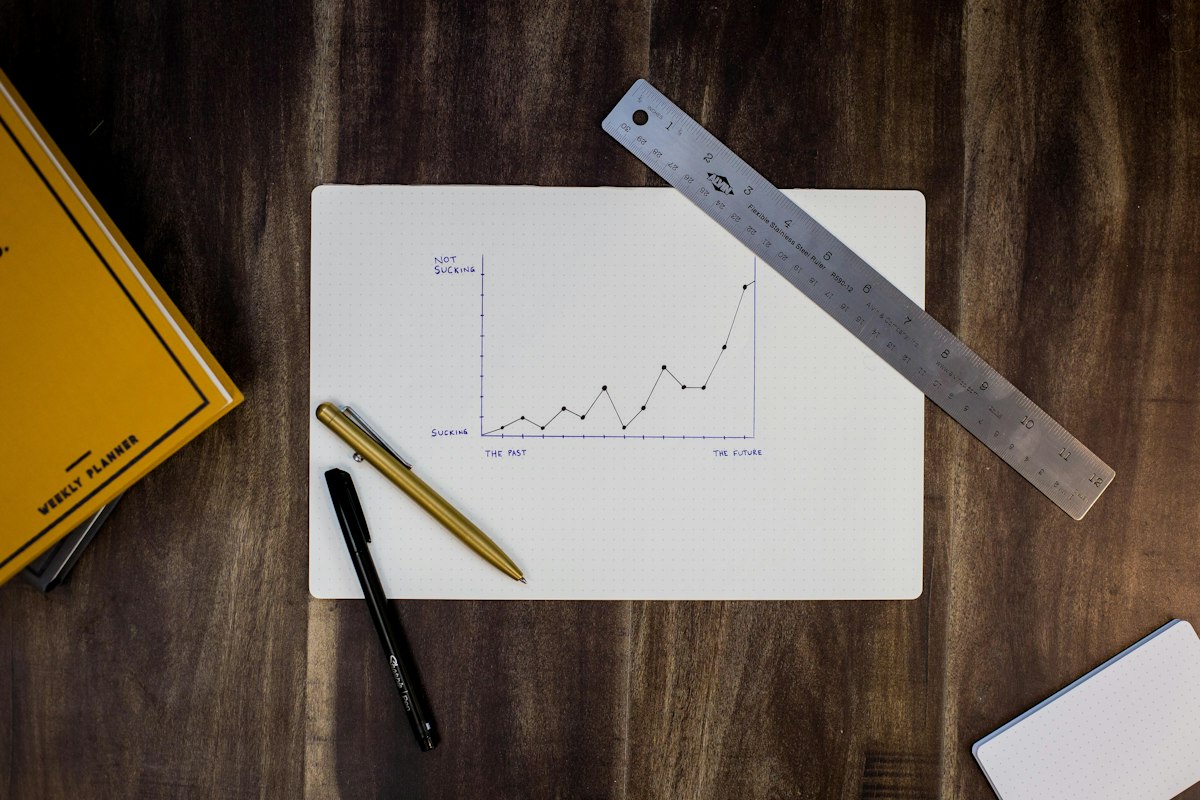
The correlation between heavy social media use and depression is well-documented. A longitudinal study published in JAMA Psychiatry found that adolescents who spent more than three hours per day on social media had double the risk of developing depressive symptoms compared to those who spent less than one hour.
FOMO — the fear of missing out — affects 69 percent of millennials, according to research by Eventbrite and the Harris Poll. FOMO is not just an emotional state; it is a measurable driver of compulsive checking behavior. People who score high on FOMO scales check social media more frequently, spend more time per session, and report lower life satisfaction.
The Dopamine Machine: Why It Feels Like a Slot Machine
Social media platforms use variable-ratio reinforcement — the same reward schedule that makes slot machines addictive. You pull the lever (open the app), and sometimes you get a reward (a like, a comment, a viral post) and sometimes you do not. This unpredictability is what keeps you pulling.
Neuroscience research from Stanford's Persuasive Technology Lab and subsequent work by Natasha Schüll on machine gambling design has shown that variable rewards trigger dopamine release more effectively than predictable ones. Your brain does not get the biggest hit from receiving a reward — it gets the biggest hit from anticipating a reward that may or may not come.
Infinite scroll is the structural embodiment of this principle. There is no natural stopping point, no bottom of the page, no "you have reached the end." The content stream is engineered to eliminate exit cues — the environmental signals that tell your brain a task is complete. Without those cues, you keep scrolling because your brain never receives the signal to stop.
Pull-to-refresh works on the same mechanism. The physical gesture of pulling down mimics a lever pull, and the brief loading pause creates a moment of anticipation before the reward (new content) appears. These are not accidents of design. They are deliberate engagement patterns.
Relationships: Phubbing and the Attention Economy at Home
The term "phubbing" — phone snubbing — was coined to describe the act of ignoring someone in your physical presence in favor of your phone. Research published in the Journal of Applied Social Psychology found that phubbing is linked to lower relationship satisfaction, reduced feelings of intimacy, and increased conflict.
A 2024 survey by the Pew Research Center found that 1 in 3 couples in relationships argue about phone use at least occasionally, with younger couples reporting higher rates. The most common complaints: one partner scrolling during conversations, checking the phone first thing in the morning before saying good morning, and bringing the phone to bed.
The irony is sharp: platforms designed to connect people are measurably disconnecting the people sitting next to each other.
Sleep: Blue Light Is Only Part of the Problem
The sleep disruption from social media is twofold. Yes, blue light from screens suppresses melatonin production, making it harder to fall asleep. But the bigger issue is psychological stimulation. Social media content — especially content that triggers emotional reactions — activates the brain's arousal system, making it difficult to wind down.
70 percent of adults use their phone within 30 minutes of bedtime, according to the National Sleep Foundation. Among those who do, the majority report taking longer to fall asleep and experiencing lower sleep quality. A meta-analysis in Sleep Medicine Reviews found that social media use before bed was significantly associated with poor sleep outcomes across all age groups studied.
The feedback loop is vicious: poor sleep increases emotional reactivity, which increases the pull toward social media for distraction or comfort, which further disrupts sleep.
Productivity: The Hidden Cost to Work
The workplace impact of social media distraction is enormous and underreported. Research from the University of California, Irvine shows that it takes an average of 23 minutes to fully refocus after a digital interruption. With the average knowledge worker checking social media multiple times per hour, the cumulative attention cost is staggering.
Estimates suggest that the average worker loses 2.1 hours per day to social media distraction, according to a study by Zippia and corroborated by RescueTime data. Extrapolated across the U.S. workforce, this represents a productivity cost exceeding $100 billion per year.
This is not a moral failing. It is an asymmetric battle between individual attention and billion-dollar engagement algorithms optimized by thousands of engineers. The system is working as designed — just not in your favor.
What Actually Works: Evidence-Based Interventions
The good news is that effective interventions exist. The research consistently points to a handful of strategies that produce measurable reductions in problematic social media use:
- Accountability partners: People who share their screen time goals with a trusted partner are significantly more likely to reduce usage. The mechanism is not surveillance — it is the social motivation of knowing someone else is aware of your patterns.
- Screen time tracking and review: Simply being shown your usage data changes behavior. A study in the Journal of Behavioral Addictions found that participants who reviewed their daily screen time reports reduced social media use by an average of 38 minutes per day within two weeks.
- Phone-free zones: Designating specific spaces (bedroom, dining table) or times (first hour of morning, last hour before bed) as phone-free creates structural boundaries that reduce default scrolling.
- App timers with friction: Built-in app timers help, but they work best when combined with additional friction — like requiring a deliberate override rather than a single-tap dismiss. The more steps between impulse and action, the more opportunities your conscious mind has to intervene.
What does not work: shame, willpower alone, or cold-turkey deletion of apps (most people reinstall within a week). Sustainable change requires understanding the pattern, not just fighting it.
See the Pattern, Not Just the Number
Statistics describe the problem. But a number on a screen time report does not tell you why you picked up your phone at that moment, what you were feeling, or what need you were trying to meet. The gap between knowing your screen time and understanding your screen time is where real change happens.
Be Candid helps you see the pattern — not just the screen time number. By combining usage tracking with accountability and conversation tools, Be Candid turns raw data into insight and insight into honest conversations with the people who matter most to you. Because the goal is not to optimize a metric. The goal is to live with more intention and less autopilot.